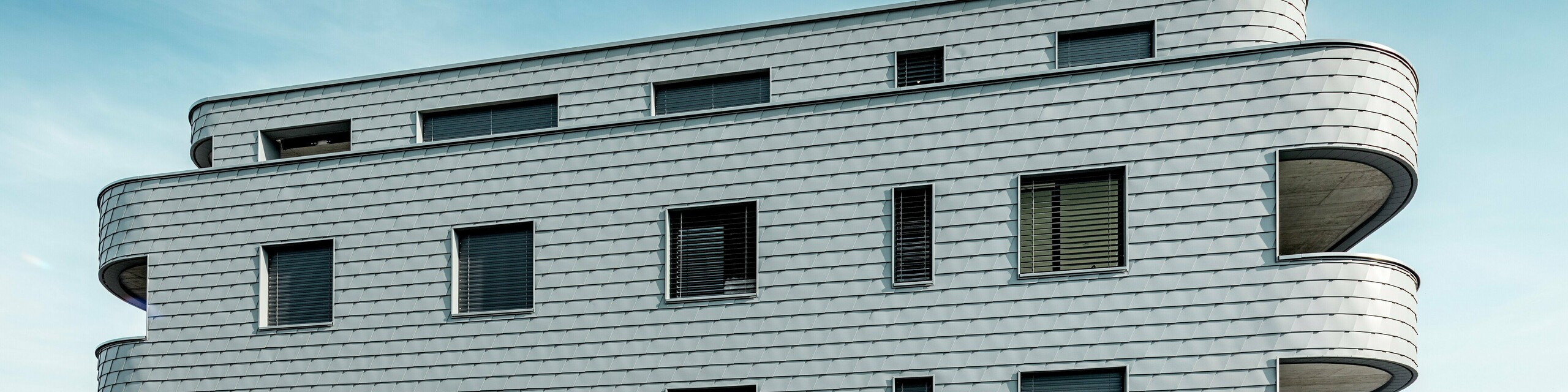
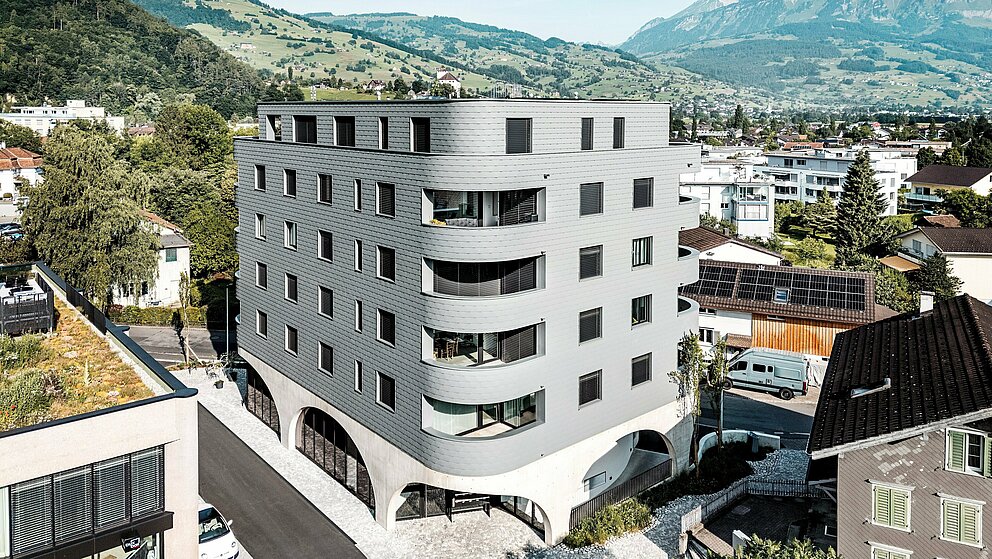
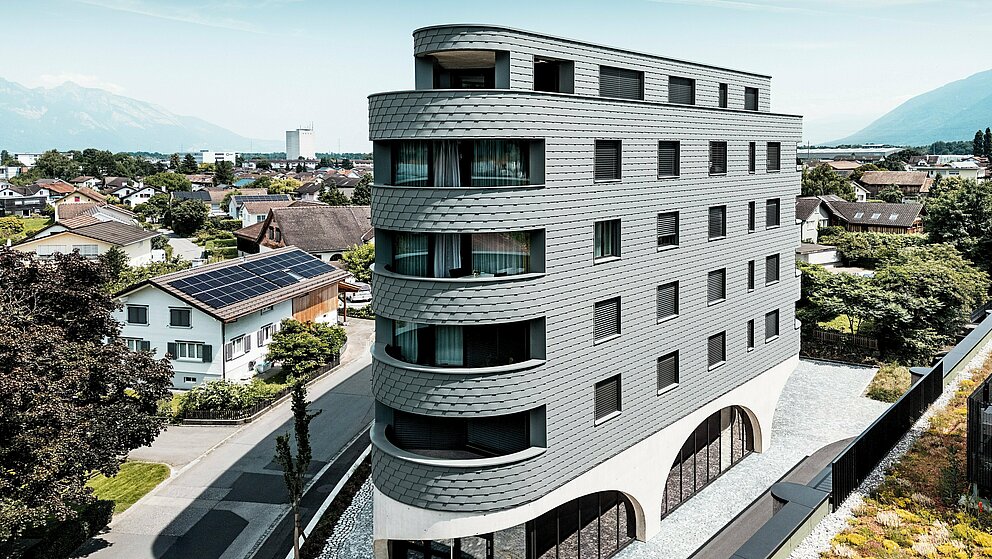
Located directly at the border triangle, the Swiss town of Buchs could hardly offer a more suitable setting for a triangular building – with the new Bernerhaus, Swiss architects Kaundbe have created an architectural homage to its geographical location. Thomas Keller, Mirko Schneeweiß and André Wille were originally tasked with renovating an old-fashioned shopping arcade from the 1970s. The result is a state-of-the-art mixed-use building with 13 rental apartments and commercial premises on the ground floor.
Solid construction with reptile skin
The Buchser shopping arcade is located directly on the main shopping street. Why not exploit the existing potential to the full and also use the triangular residual area used as a car park? So the architects designed a multi-storey residential building for the new Bernerhaus on Schäflisteig. And with it, a prime example of skilful urban infill development.
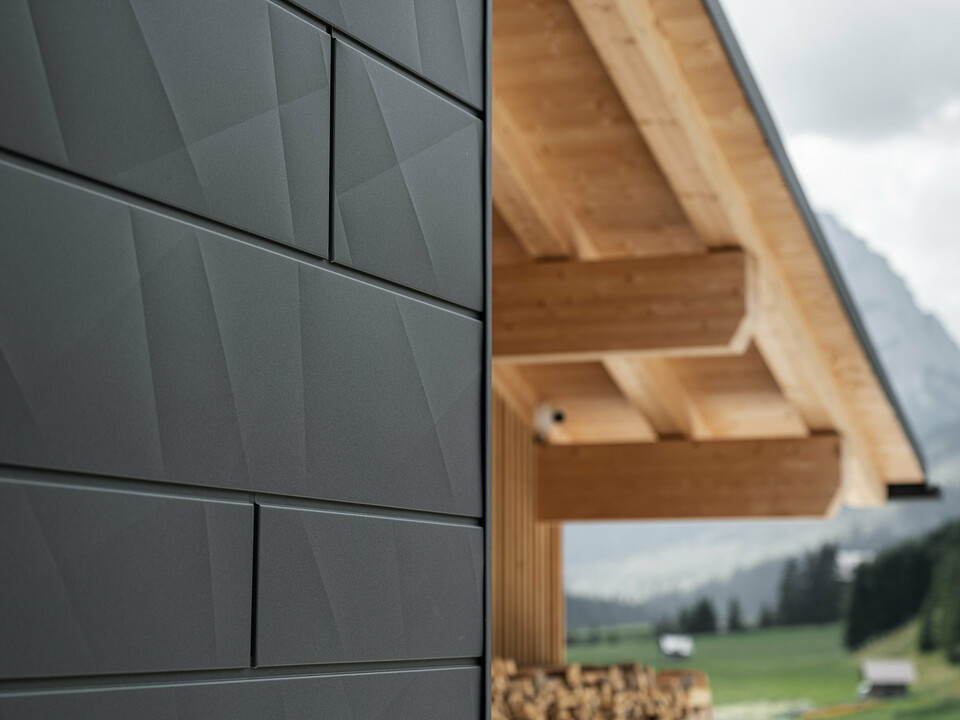
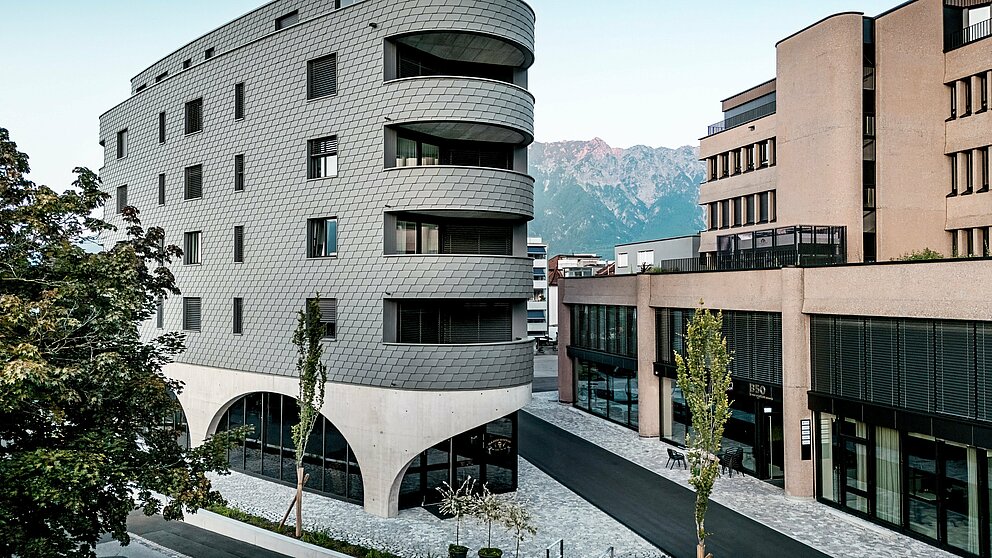
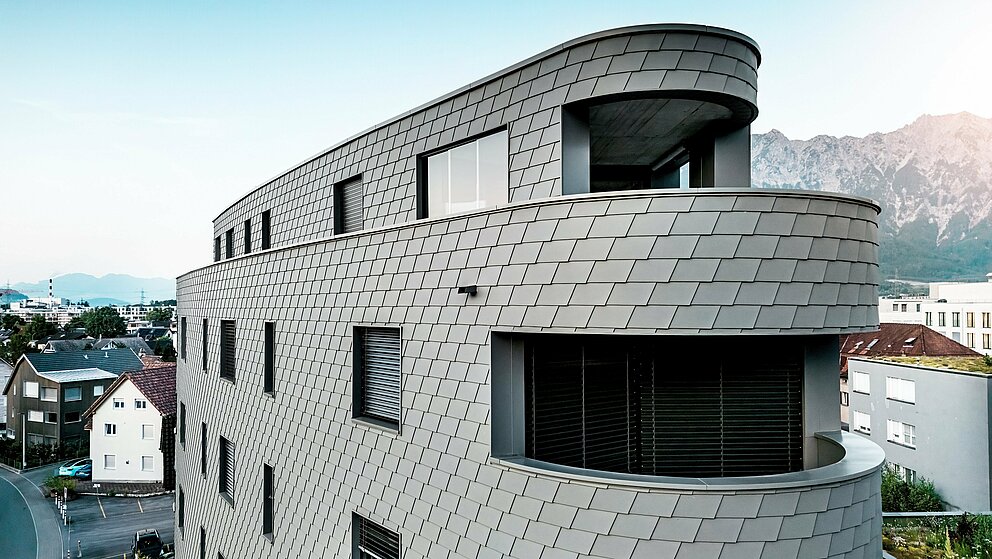
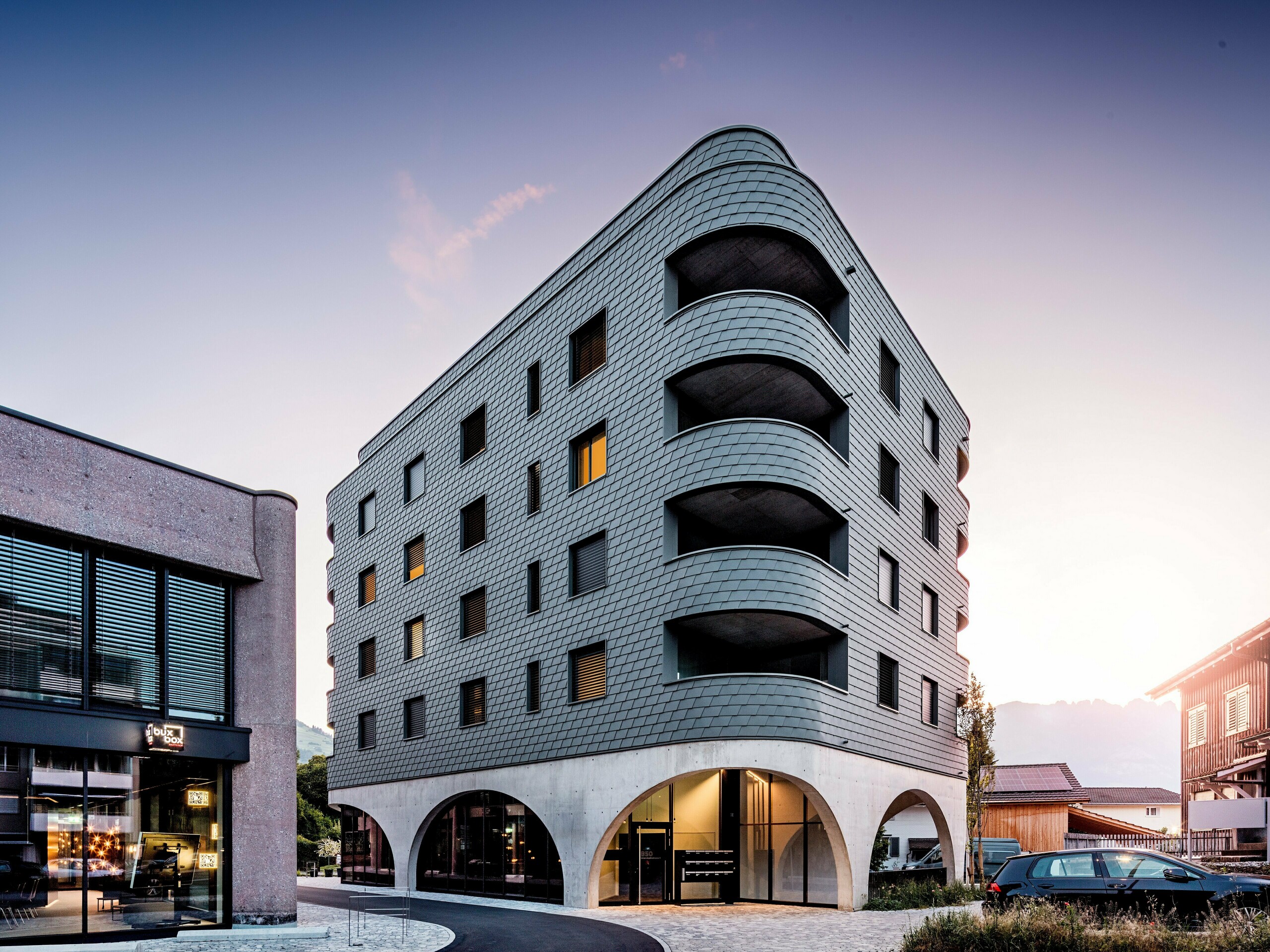
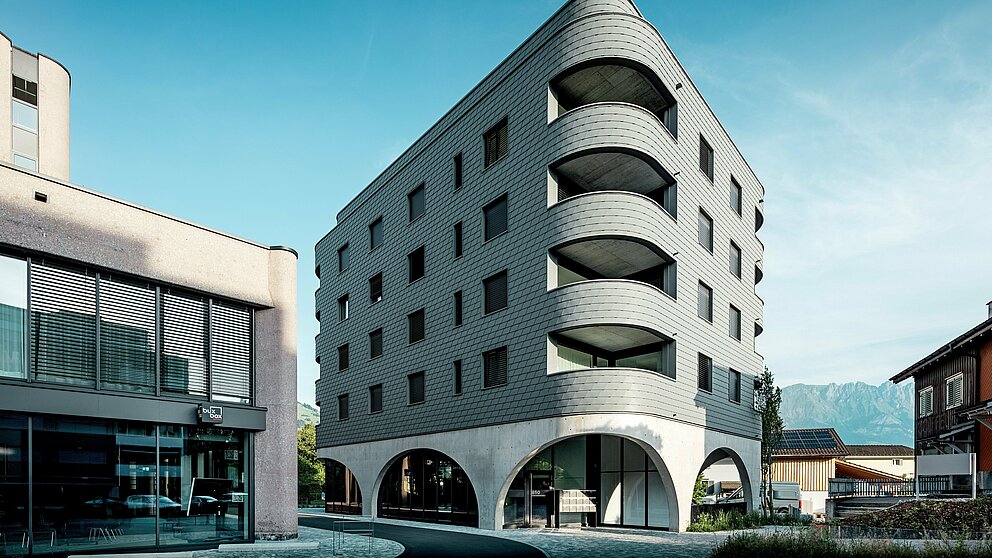
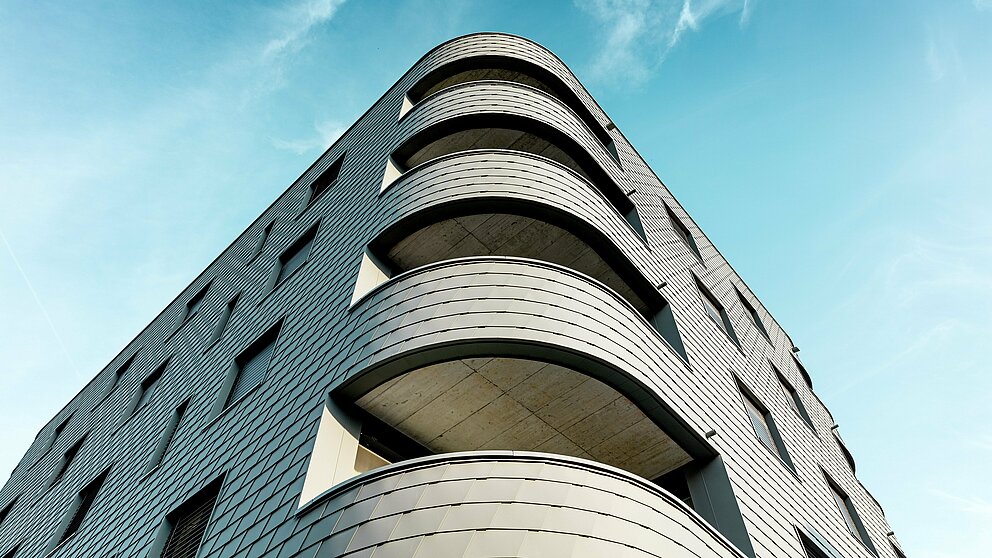
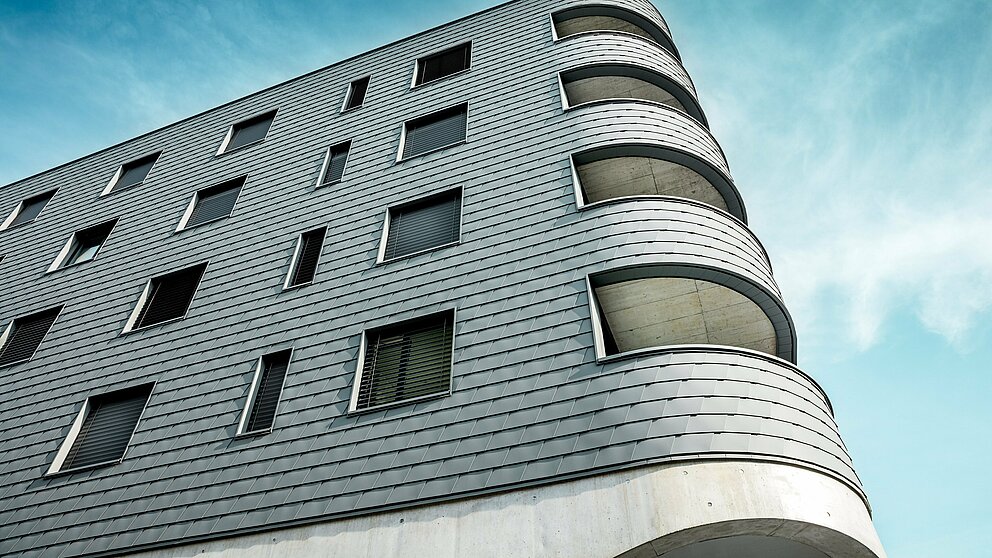
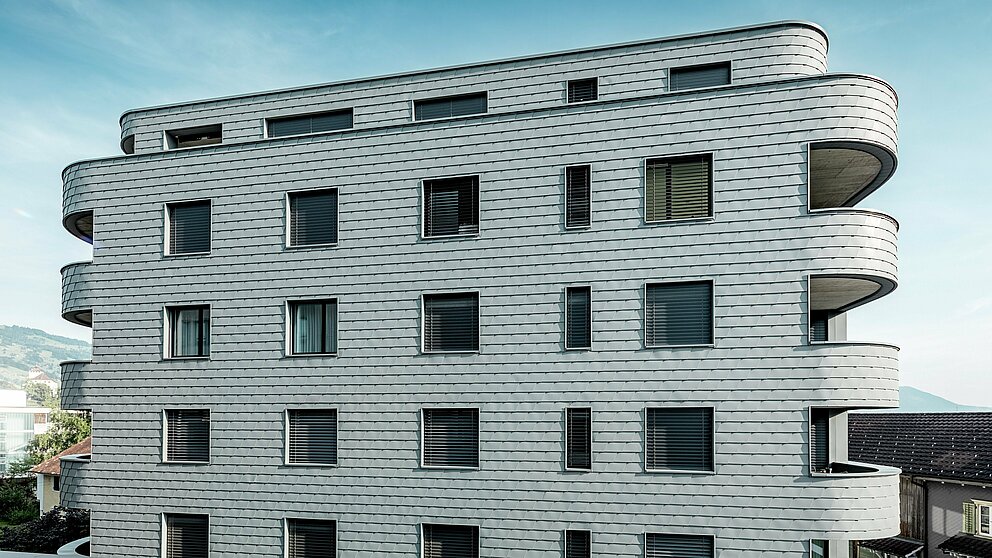
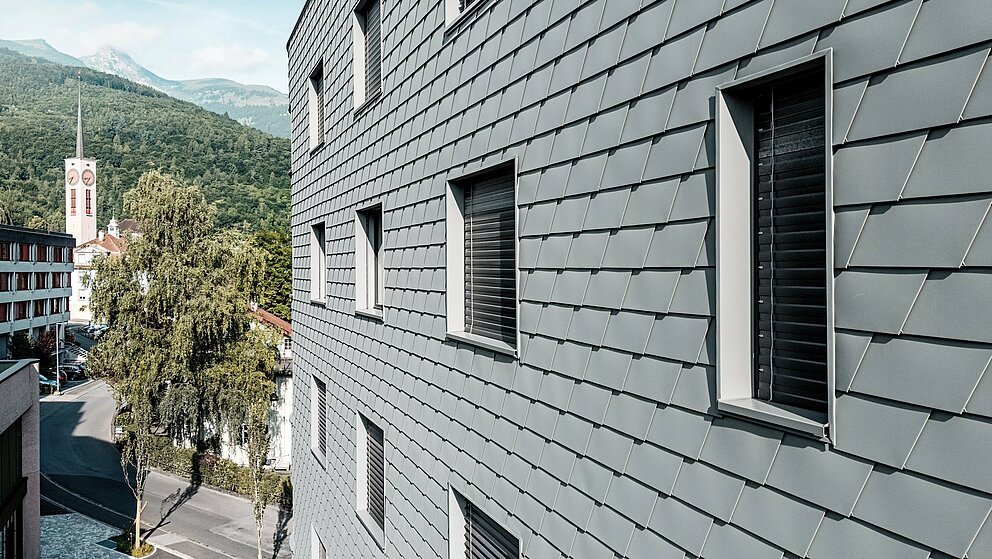
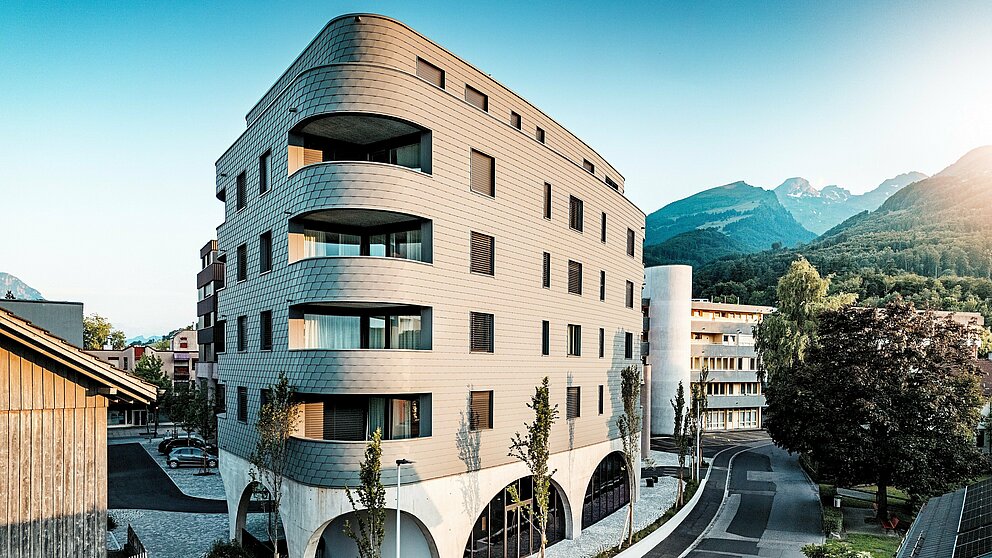
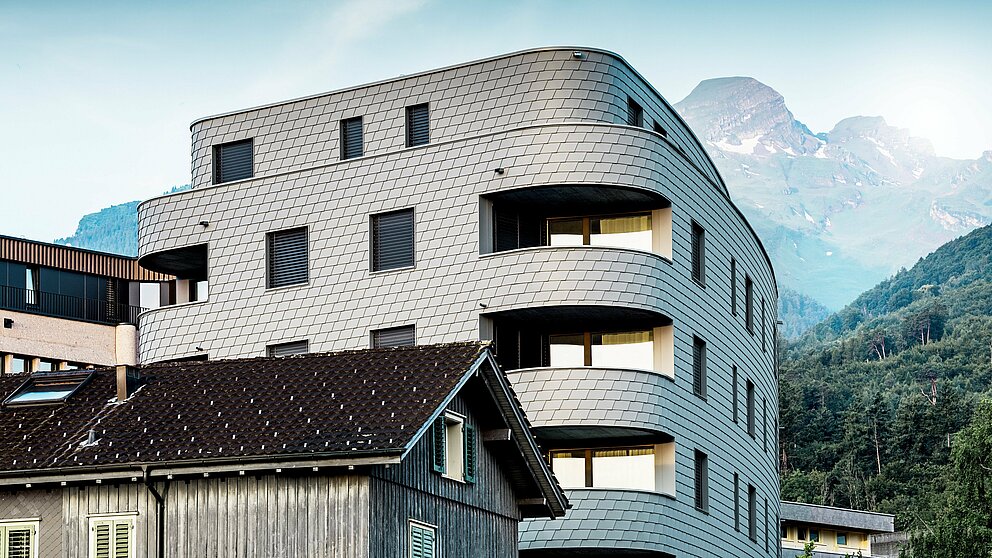
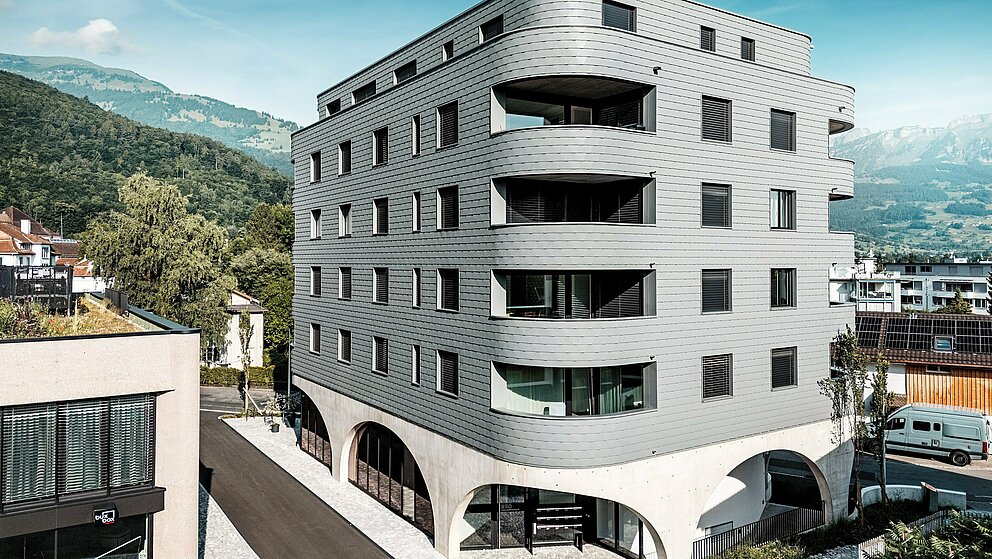
The new building combines solid construction with an unusual appearance. This is partly due to the edgeless triangular shape of the building. On the other hand, its ‘scaly reptile skin’ made of small PREFA façade shingles in P.10 light grey, which form a uniform metal façade, is a real eye-catcher. It was also a good choice because, thanks to their format, the wall shingles can also be laid in a tight radius, enabling the rounded corners. ‘Traditional Swiss detached houses begin directly behind our building, and they are shingled,’ says Keller, explaining his creative design decision.
Arcade over garage
The visually and materially light-footed façade forms the perfect contrast to the solid exposed concrete foundation, which forms the arcades of the ground floor with asymmetrically curved arches. This is also the result of efficient design: the architects used the supports of the underground car park beneath the building to transfer the load of the residential building. The arches of the base floor begin where the exterior walls and supports overlap.
‘We had to think economically about both grids. This resulted in the exciting shape of the arches due to their points of overlap. It was clear that these were the only points where we could transfer the load.’ This was a far-reaching decision that also influenced the façade. ‘It had to be a lightweight façade, if only because of these static conditions,’ says Thomas Keller, explaining his choice of an aluminium façade.
Win-win-win!
‘Architecturally appealing, technically a major challenge,’ says Gabriel Landolt from Künzli Davos. The long-established Swiss company created the scale-like façade and has relied on the quality of PREFA for years: ‘On the one hand, the material is very light and at the same time weather-resistant. Visually, it is possible to create a homogeneous surface that is stylistically timeless and particularly durable. Like all PREFA products, the wall shingles used in Buchs are low-maintenance. And the aluminium can be sustainably recycled as a secondary raw material.’

Precision is everything
To ensure that the intended effect of the façade was maximised, technical details and precise workmanship were essential: ‘If the sub-structure framework is not right, the irregularities multiply,’ says Landolt, referring to the challenges of the construction, which involved using aluminium rails on brackets that were fastened at specific points in the concrete. Only a flat surface guarantees a homogeneous finish with individually mounted shingles – essential for the many arches and curves of the cornerless Bernese house. As we all know, the devil is in the detail.
Further information
Material: façade shingles, P.10 light grey
Photo credit: PREFA / Croce & Wir